

Comparing home loan rates in NZ: why the lowest rate isn’t always the cheapest loan
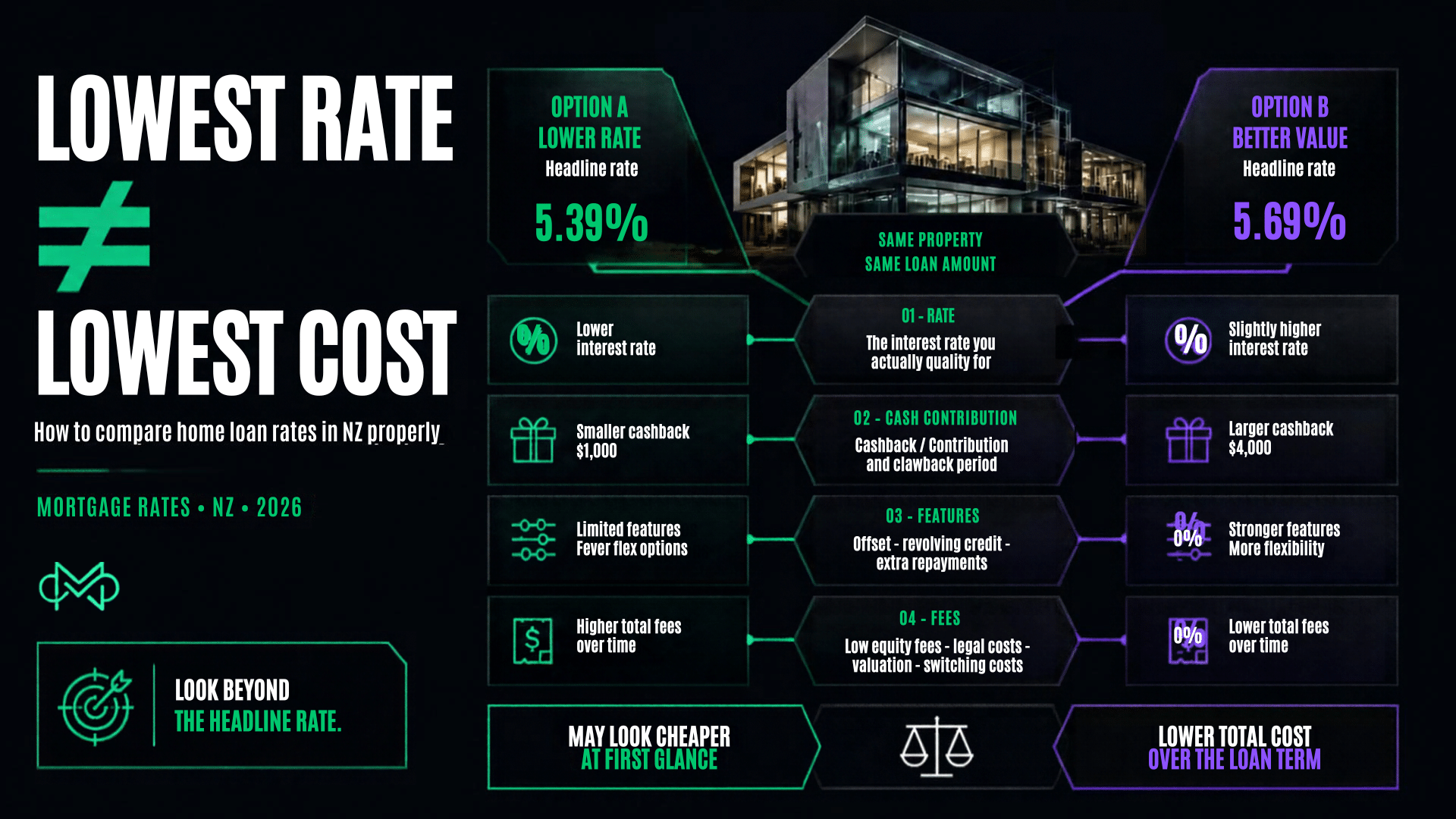
To compare home loan rates in New Zealand properly, look at four things together: the rate you’ll actually qualify for (not the advertised one), any cash contribution and how long you must stay to keep it, the loan features you need, and the fees. The bank with the lowest headline rate often isn’t the cheapest over three years once those are counted.
Bank rates and offers change weekly, so treat the numbers here as examples, not current pricing.
The advertised rate is the best case
When a bank advertises a rate, it’s usually a “special” rate. Specials normally need at least 20% equity or deposit, and sometimes a particular account package. The rate on the bank’s full rate card, often called the carded or standard rate, is higher.
So the first question isn’t “who’s cheapest?” but “which rate would I actually get?” That depends on:
- Your equity or deposit. Under 20% and most banks add a low equity margin or a one-off low equity fee. See low deposit home loans for how this works.
- Whether the property is your home or a rental. Some banks price investment loans differently.
- Your income type. If you’re self-employed with full accounts, the main banks will usually price you on the same card. With thinner documents, the choice of lender narrows.
- How much the bank wants your business. The size of the loan, and what else you bring to the bank, can move the rate.
What a 0.25% difference is worth
People sometimes switch banks for a small rate gap, and sometimes ignore a big one. Here’s roughly what a gap costs in interest over a year, before any change in the balance:
| Loan amount | 0.10% gap | 0.25% gap | 0.50% gap |
|---|---|---|---|
| $400,000 | $400 | $1,000 | $2,000 |
| $600,000 | $600 | $1,500 | $3,000 |
| $800,000 | $800 | $2,000 | $4,000 |
| $1,000,000 | $1,000 | $2,500 | $5,000 |
When you compare home loan rates, weigh any gap like this against the cash contribution, which is the next thing to look at.
Cash contributions and clawbacks
Most NZ banks will pay a cash contribution (often called cashback) when you bring them new lending. It might be a flat amount or a percentage of the loan. It sounds like free money, and it partly is, but it comes with a minimum stay. If you refinance away before that period ends, commonly three or four years, the bank can ask for some or all of it back.
A quick way to compare two offers on a $400,000 loan, using made-up numbers:
| Bank A | Bank B | |
|---|---|---|
| Two-year fixed rate | 5.39% | 5.69% |
| Cash contribution | $1,000 | $4,000 |
| Extra interest over two years vs Bank A | $0 | about $2,400 |
| Net position over two years | +$1,000 | about +$1,600 |
In this example Bank B comes out ahead, even though its rate is higher. Stretch it to four years at the same gap and the answer flips. That’s why I compare over the time you actually expect to keep the loan, not just the first fixed term.
Cash contributions also cover the legal fees of switching, which matters more than it sounds. The switching banks guide lists the other costs.
Features that change the real cost
Two loans at the same rate can cost very different amounts depending on how you repay them.
The biggest one is how much extra you can pay on a fixed rate each year without a break fee. Lenders differ a lot here, and if you plan to hammer the loan it matters more than a few basis points.
Offset accounts and revolving credit cut interest by setting your savings and pay against the balance. Not every bank offers offset, and the ones that do set it up differently.
Then there’s what happens later. Some banks make it easy to split the loan or top it up for a renovation, while others treat each change as a new application. A few let you lock a rate ahead of settlement or rollover, which is handy when rates are rising.
I compare 30+ lenders and can show you what each bank would actually offer on your loan, cashback included.
Compare my loan →Fees that don’t make the headline
Ask for these in writing before you commit:
- Application or establishment fees (often waived, but not always)
- Low equity fee, if you’re under 20% deposit
- Monthly account or package fees
- Valuation costs, if the bank wants a registered valuation
- Break fees on your current loan if you move before the fixed term ends. My break fees guide explains how they’re worked out.
Using comparison sites to compare home loan rates
Comparison tables are a good place to start and I’d use one to get a feel for the market. They show advertised rates. They can’t show the special pricing a bank will offer to win a particular loan, the cash contribution on the day, or whether your application fits that bank’s lending policy. Those three things are where most of the difference is.
I compare more than 30 lenders, and banks often price loans that come through an adviser differently from their public card. Applying to five banks yourself to find out also leaves five credit enquiries on your file, which can work against you. I’ve covered that in home loan declined? here’s what actually blocked it.
A checklist to compare home loan rates
- Write down the rate you’d qualify for on each term, not the advertised special.
- Note the cash contribution and the clawback period.
- Estimate how long you’ll keep the loan. Compare the total cost over that period.
- Check the features you’ll use: extra repayments, revolving credit, offset.
- List every fee, including the cost of leaving your current bank.
- Ask your current bank to match the best offer. Then decide.
The repayment calculator helps with step 3, and the borrowing calculator is useful if you’re buying rather than refixing.
Common questions
How do I compare home loan rates in NZ?
Which bank has the best home loan rates in NZ?
What is the difference between a special rate and a carded rate?
Do I have to pay back a cash contribution?
Does using a mortgage adviser cost more?
Read next
Fixed or floating?
How to choose a term when your rate comes off.
Switching banks
What moving your loan actually costs.
Choosing a bank
Rates are one part. Policy and features are the rest.
Low deposit home loans
How low equity margins change the rate you get.
Talk it through with Yatin. Free, no obligation, and usually one phone call.
Book a free chat →Or call 022 064 7770
This article is general information only and isn’t personalised financial advice. Rates and examples are illustrative. Mortgage Sense is a trading name of Yatin Kainth, a Financial Adviser (FSP1007497) providing advice under the Mortgage Managers licence (North West Group Holdings Ltd, FSP682791). See the Disclosure Statement.
Ready to talk it through?
Get mortgage advice NZ homeowners actually trust. Book a free, no-pressure chat with Yatin.
Book a free chat →