

Home loan declined in NZ? Here is what actually blocked your application
Last reviewed: 26 August 2026. Reserve Bank settings and lender policies change, so check the linked sources for the current position.
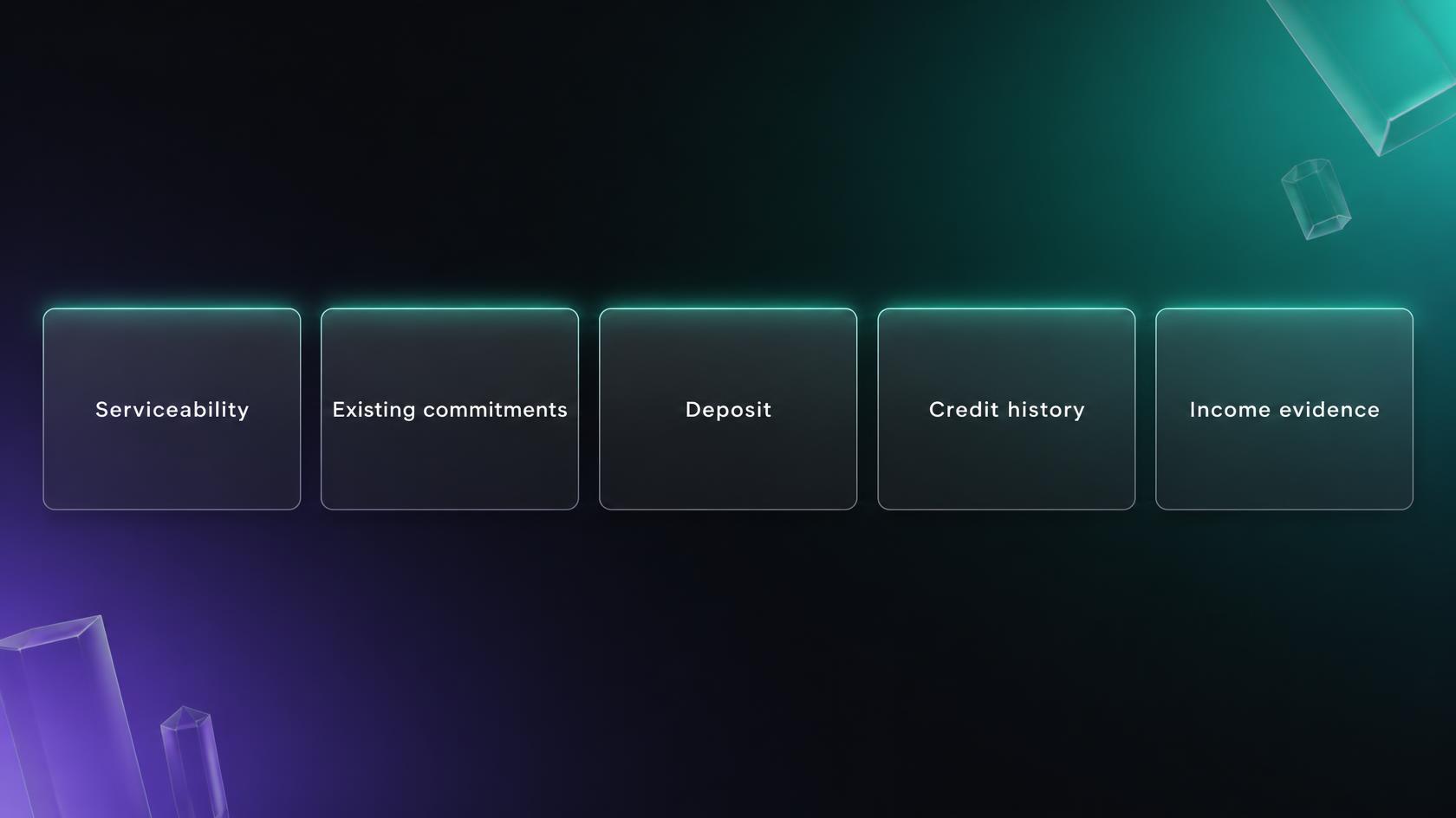
If your home loan has been declined, do not immediately apply to another bank. A decline usually reflects one part of the assessment rather than the whole application, and the common factors are serviceability, existing commitments, deposit size and source, credit history, and how your income is evidenced. Which one applied to you determines what to do next, so it is worth asking before you use another application.
Start here: do not reapply yet
If your home loan has been declined, the most useful thing you can do in the first week is nothing at all, at least in terms of new applications.
I see people go straight to the next bank, and I understand why. It feels like momentum. But each application generally creates a credit enquiry on your file, and a run of them in a short period is visible to the next lender. More to the point, if you do not know which part of the assessment fell short, the second application is likely to hit the same wall as the first.
The question I ask first when someone comes to me after a decline is simple: what number were you assessed at, and what did you need? Quite often nobody has told them. That single figure is what separates a problem you can fix this month from one that takes considerably longer.
What a decline usually means
Someone posted in a New Zealand first home buyers group I help moderate that they had been told no for the third time. They had a substantial deposit saved, some consumer debt, a business they had run for over two years, and they were paying more each week in rent than the mortgage repayments would have been. The thread ran to a few hundred comments in a day. Roughly half said pay the debt down first. The other half said find a different adviser.
Both camps were partly right, which is unsatisfying but true.
A decline is rarely a judgement on whether you are good with money. Lenders run an assessment that combines a calculation with a broader credit review, weighing your income and commitments against their policy settings, alongside your credit history and the security itself. Somewhere in that process a figure came out lower than the loan you needed, or something in the wider picture did not meet policy.
The useful question is which part, because the fixes are not interchangeable. Reducing a credit card limit is a short piece of work. Rebuilding a credit history after arrears is not.
Serviceability: what the lender is testing
Serviceability, sometimes called the affordability assessment, is a lender calculation that checks whether you could still meet the repayments if interest rates were higher than they are today. It is one of the more common places an application falls short, in my experience.
This is the part clients find hardest to accept, and I think that is fair enough. You can be paying well above the likely mortgage repayment in rent, on time, for years. A strong rental history is genuinely useful context and some lenders will take it into account, but it does not replace the lender’s own affordability assessment, because that assessment is asking a different question.
It is testing the repayment at a rate above the advertised one. Test rates vary between lenders and move over time, and they can sit materially higher than the rate you would actually be charged. On top of that the lender adds rates, insurance and an estimate of your household living costs.

Living costs are worth getting right
Lenders compare the living expenses you declare against their own benchmark for a household like yours. If what you have written down looks low against that benchmark, they may use their figure rather than yours, and a gap between your stated costs and your actual statements tends to invite questions.
So trimming spending genuinely helps, because it shows up in your transactions over time. Writing down a smaller number on the form, on its own, generally does not.
Test rates are set by each lender as a matter of credit policy, not prescribed by the Reserve Bank. Two lenders looking at the same financials can reach noticeably different borrowing figures, which is a large part of why where an application goes matters.
Existing commitments and credit card limits
This is the area I see move the number most often, and it is usually the quickest to act on.
A personal loan or car loan is generally assessed on its repayment rather than its balance. Lenders take the ongoing commitment and factor it into what you have available for a mortgage, so a modest-looking loan with a high repayment can reduce borrowing capacity by more than people expect.
Credit cards work differently again. Most lenders assess against the limit rather than the balance, on the basis that you could draw the full limit at any time. A card you clear every month, or never use, can still be treated as an ongoing obligation. Buy now, pay later arrangements also show up in your transactions and can form part of the picture.
Where the deposit and income are otherwise sound, reducing commitments is often the highest-value change available, and it can be done in weeks rather than years. If you close a card, ask for written confirmation that the facility is closed, because an assessor will generally want to see it.
Consolidating debt into the mortgage comes up a lot in this conversation. It can help in some situations and make things worse in others, particularly by stretching a short-term debt over thirty years. It is worth working through properly rather than treating it as a default move.
More on this: how credit cards affect your home loan approval.
Not sure which part of the assessment stopped you?
We can discuss what may have caused the decline and what your options could be.
Debt-to-income restrictions
A debt-to-income ratio, or DTI, compares your total borrowing against your gross annual income. Since 1 July 2024 the Reserve Bank has restricted the share of high-DTI lending banks can write. Banks may write up to 20 percent of new owner-occupier lending to borrowers with a DTI above 6, and up to 20 percent of new investor lending to borrowers with a DTI above 7.
The distinction matters, and it is one I find is widely misunderstood. Six and seven are not absolute borrowing caps. They are thresholds, and the restriction is a speed limit on how much lending above those thresholds a bank can do. Banks can and do lend above them, within their permitted allocation and their own policy.
Two practical consequences follow.
The first is that a larger deposit does not directly resolve a DTI issue, because DTI is measured against income rather than equity. A larger deposit does reduce the loan amount, which lowers the ratio, but it does not lift your income.
The second is that whether a particular bank will use its high-DTI allocation on your application depends on the strength of the rest of the file and on that lender’s appetite at the time. There are also exemptions, including new builds and Kāinga Ora lending.
| What fell short | What tends to help | Indicative timeframe |
|---|---|---|
| Serviceability | Reducing commitments, strengthening evidenced income, a lender whose policy suits you better, a longer term, or a lower purchase price | Weeks to months |
| Credit card limits | Reducing or closing limits, with written confirmation | Days to weeks |
| Other consumer debt | Reducing the commitments that weigh most heavily on serviceability | Weeks to months |
| Debt-to-income ratio | Higher income, a smaller loan, or a lender with allocation and appetite | Varies |
| Deposit below 20 percent | First Home Loan if eligible, low-deposit lending, or a larger contribution | Varies |
| Deposit source not yet evidenced | Gifting documentation, and a savings record where the lender requires one | Varies by lender |
| Missed payments, arrears or defaults | Time and consistent conduct. Recency, size and the lender’s policy all matter | Depends on the circumstances |
| Self-employed with a shorter trading history | Stronger supporting evidence, or a lender whose policy accommodates it | Varies |
Deposit, LVR and where the money came from
A deposit that sounds substantial can still sit below 20 percent once you measure it against the price of the property you are buying, which puts the application into low-deposit territory.
The Reserve Bank limits the share of high-LVR lending banks can write. As at August 2026, banks may write up to 25 percent of new owner-occupier lending above 80 percent LVR, and up to 10 percent of new investor lending above 70 percent LVR. Low-deposit lending is therefore rationed at a portfolio level rather than prohibited, and appetite can vary between lenders and over time. Notably, Kāinga Ora lending including First Home Loans is exempt from the LVR restrictions, which is why that pathway is worth checking if you are eligible.
Where the money came from can matter too
Lender requirements around genuine savings vary, and there is no single national rule. Some lenders want to see a portion of the deposit accumulated over time, some place more weight on the overall picture, and the treatment often depends on whether the deposit is savings, KiwiSaver, a gift, or a combination.
A gifted deposit can absolutely work. It generally needs a gifting letter confirming the money is a gift rather than a loan, and some lenders will also want to see a savings pattern alongside it. If a large sum arrived in your account recently, expect to be asked about it. That is a normal part of the process rather than suspicion.
Worth reading alongside this: changes to low-deposit lending rules and ASB’s five percent deposit option.
Credit history and how your accounts look
Clients tend to worry about their credit score. In practice, assessors also read the bank statements closely.
They generally look across three to six months of transactions for patterns: dishonoured direct debits, accounts going into unarranged overdraft, or regular gambling activity. These will not always be visible in a credit score, and depending on the lender and the pattern they can weigh against an application that otherwise looks strong.
Credit enquiries are recorded on your file and can be relevant, though they are easy to over-read. Several enquiries in a short period may prompt a lender to ask what happened, and they do not automatically indicate previous declines. People shop around, get quotes, or apply for unrelated credit. It is reasonable to expect the question, and reasonable to have an answer for it. That is a large part of why I suggest understanding the first decline before making a second application.
Arrears and defaults are more involved. How much weight a lender gives them depends on how recent they are, how large, whether they have been paid, and that lender’s own policy. There is no universal waiting period, and I would be cautious of anyone who quotes you one without looking at your file.
Background reading: how your credit score works in New Zealand, and Consumer Protection’s guidance on credit checks, scores and history.
You are entitled to request your own credit report from Centrix, Equifax or Illion. Checking it yourself does not affect your score the way a lender enquiry can, and it is worth doing before any new application.
When your income is a different shape
Plenty of declines have less to do with how much you earn than with how the income arrives and how it can be evidenced.
If you are self-employed, many lenders look for two full financial years of accounts and assess taxable profit rather than drawings. An accountant working to minimise your tax can, without anyone doing anything wrong, reduce the income figure a lender assesses you on. In my experience that gap is one of the more common reasons a self-employed application comes in lower than expected.
A shorter trading history does not automatically push you to alternative documentation lending. Requirements vary between lenders, and some will consider a shorter history where there is relevant prior experience in the same field, an ongoing contract, or strong supporting evidence such as GST returns, business banking and an accountant’s confirmation. Specialist and non-bank lending is another avenue, though it is not the only one and not always the right one.
Contractors, people on commission, anyone with a significant overtime component, and households returning from parental leave all encounter versions of the same evidencing question.
If this is you, the fuller breakdown is here: self-employed home loans in New Zealand.
If a non-bank lender is suggested
Non-bank and specialist lenders assess some situations more flexibly than main banks. That flexibility generally comes with higher interest rates and additional fees, so the total cost needs to be weighed against the benefit of buying sooner.
If the plan involves refinancing to a main bank later, treat that as an intention rather than a certainty. It depends on your circumstances at the time and on lender policy then, neither of which can be guaranteed now. I would want a realistic exit strategy discussed openly before going down this path, including what happens if refinancing is not available when expected.
More detail: non-bank home loans in NZ.
What to do in the next 30 days

Ask what you were assessed at
Ask your adviser or lender what borrowing figure the assessment produced and how it compared with what you needed. A figure gives you something to work with. Being told you did not qualify does not.
Request your own credit report
Available from Centrix, Equifax or Illion. Look for defaults you were unaware of, which do turn up, and for closed accounts still showing as open.
List every commitment with its repayment
The repayment rather than the balance, and for cards the limit. Then look at which reduction would do most for your serviceability. It is not always the largest debt.
Close facilities you no longer use, properly
Cancelling a card is not always the same as closing the account. Ask for written confirmation.
Tidy the next few months of statements
An assessor is likely to read them. Consistent conduct, no unarranged overdrafts, and a visible savings pattern all help.
Then apply once, to a lender whose policy fits
With the supporting evidence already assembled, rather than making several applications and hoping one lands.
Can a mortgage adviser help after a decline?
Often, yes, though it depends on what caused the decline, and it would be wrong to suggest an adviser can undo every one.
Where an adviser tends to add value is in the diagnosis. Lender policies differ, sometimes substantially, on test rates, how overtime and commission are treated, self-employed income, deposit source and credit history. Knowing which lenders are likely to view your circumstances more favourably is most of the work, and it is difficult to do from the outside.
The other part is preparation. A decline sometimes comes down to how the application was presented rather than the underlying position, particularly where income is not straightforward. Full financial statements instead of a summary, a clear explanation of a one-off expense, or documentation for a gifted deposit can all change what the assessor is able to consider.
What an adviser cannot do is change your income, remove an accurate default from your file, or override a lender’s credit policy. If the honest answer is that buying is not achievable right now, you are better served hearing that with a plan attached than being sent to another lender to find out the expensive way.
It is also worth knowing that anyone giving you regulated financial advice in New Zealand must be operating under a licence issued by the Financial Markets Authority. The FMA has useful guidance on working with a financial adviser, including what to ask about fees and how an adviser is paid.
When a second opinion is reasonable
Ideally a decline comes with a figure and a next step. If you have not been given either, you have not really been given an answer yet.
A second opinion is worth considering when nobody has told you what you were assessed at, when only one lender has seen your file, when your income is self-employed or otherwise non-standard, or when you were told no without any indication of what would need to change. Equally, if you have been given a clear figure and a plan with a timeframe, that may well be sound advice even though it is not the answer you wanted.
Where these rules actually come from
It helps to know which constraints are regulatory and which are the individual lender’s choice, because they behave differently.
- Reserve Bank rules. The LVR and DTI restrictions are set by the Reserve Bank and apply across registered banks. They are portfolio speed limits on the lender rather than eligibility rules about you.
- Lender credit policy. Test rates, living cost benchmarks, how credit card limits are assessed, genuine savings expectations and self-employed requirements are set by each lender. These vary, and they change.
- General market practice. Requesting bank statements, gifting letters and accountant confirmations is common across the market, though the specifics differ.
- Mortgage Sense experience. Where I have said something is common or is what I see most often, that is my observation from working with clients, not published data. I have tried to label it as such throughout.
Sources and further reading
- Reserve Bank of New Zealand, Understanding debt-to-income restrictions
- Reserve Bank of New Zealand, Understanding loan-to-value restrictions
- Consumer Protection, Credit checks, scores and history
- Financial Markets Authority, Working with a financial adviser
Frequently asked questions
Lenders assess the repayment at a test rate above the advertised rate, and add estimated living costs and existing commitments. A strong rental history is useful context and some lenders will consider it, but it does not replace that affordability assessment, because the assessment is testing a higher repayment than the one you are making now.
There is no fixed waiting period. What matters is whether something has changed. If you have closed a credit card or cleared a loan, a new application may be reasonable within weeks. Where the issue was arrears or a default, the timeframe depends on how recent and how significant it was, and on the lender’s policy. Reapplying with nothing changed generally just adds another enquiry.
The decline itself is not recorded on your credit file, but the enquiry generally is, and it is visible to other lenders. Several enquiries in a short period may prompt questions, though they do not automatically mean you were declined. Checking your own credit report does not have the same effect as a lender enquiry.
Partly. A larger deposit means a smaller loan, which lowers both the required repayment and the DTI ratio, so it can help. What it does not do is increase your assessed income. Where income is the limiting factor, additional savings may not be enough on their own.
It is possible in many cases. Lender policies differ on test rates, treatment of overtime and commission, self-employed income, deposit source and credit history, so a decline at one bank reflects that lender’s policy rather than the whole market. Understanding why the first application fell short helps direct the next one sensibly.
Generally yes. Most lenders assess against the limit rather than the balance, because the full limit could be drawn at any time. A card you clear monthly can still reduce your borrowing capacity, which is why reducing or closing unused limits is often one of the quicker adjustments available.
No. Six for owner-occupiers and seven for investors are thresholds, not absolute caps. Banks may write up to 20 percent of new owner-occupier lending above a DTI of 6, and up to 20 percent of new investor lending above 7. Lending above those levels does happen, within each bank’s allocation and its own credit policy, and exemptions apply including new builds and Kāinga Ora lending.
It depends on what caused the decline. Non-bank and specialist lenders can assess credit history, self-employed income and unusual circumstances more flexibly, generally at higher rates and with additional fees. If the plan is to refinance to a main bank later, treat that as an intention rather than a certainty, and make sure a realistic exit strategy is discussed before you commit.
Not necessarily, though you are entitled to specifics. Ask what figure you were assessed at, which lenders were considered, and what would need to change. A clear figure and a plan with a timeframe may well be sound advice even when it is not what you hoped to hear. If you cannot get either, seeking a second opinion is reasonable.
Talk through what happened
Send through what you were told and your current position. We can discuss what may have caused the decline, what your options could be, and what a realistic timeframe might look like.
This article is general information only and is not personalised financial advice. It does not take account of your objectives, financial situation or needs. Reserve Bank settings, lender credit policies and lending criteria change regularly, and any figures described are indicative rather than an offer of finance. All lending is subject to individual lender assessment and approval. Please speak with a financial adviser about your own circumstances. Our Disclosure Statement sets out our services, fees, conflicts of interest and complaints process, and is also available on request free of charge.
Ready to talk it through?
Get mortgage advice NZ homeowners actually trust — a free, no-pressure chat with Yatin.
Book a free chat →