If you’ve ever thought about building a granny flat but felt overwhelmed by council consents, delays, or costs, you’re not alone. For years, the idea made sense on paper but felt hard to act on.
That’s changed.
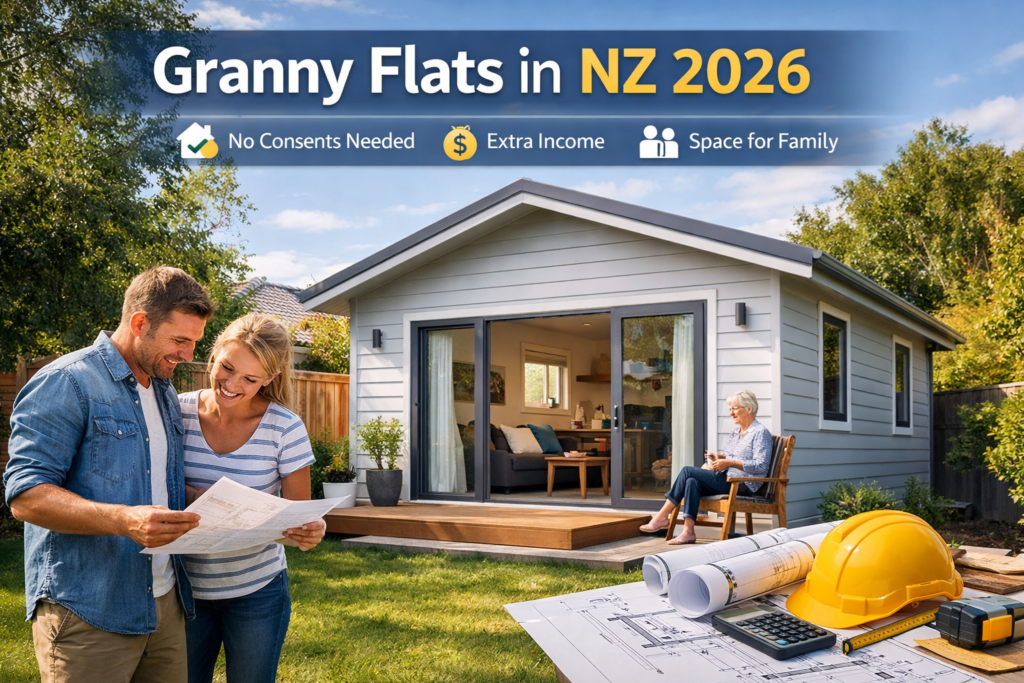
With new rules now in place in 2026, many New Zealand homeowners can build a granny flat up to 70m² without needing resource consent or building consent, as long as certain conditions are met. This is a major shift, and it’s quietly opening the door to new opportunities for homeowners, families, and investors across NZ.
Whether you’re thinking about extra rental income, housing for family, or future-proofing your property, granny flats are now more achievable than ever.
Let’s walk through what’s changed, why it matters, and how to know if it could work for you.
What Is a Granny Flat?
A granny flat (also known as a minor or secondary dwelling) is a small, self-contained, standalone home built on the same property as your main house.
Most granny flats include:
- A bedroom
- Bathroom
- Kitchen
- Living space
Despite the name, they’re no longer just for grandparents. Today, granny flats are commonly used for:
- Rental income
- Adult children saving for their first home
- Elderly parents wanting independence close to family
- Flexible guest or work-from-home space
What Changed in 2026? (The Big Update Explained Simply)
The government introduced changes in early 2026 to help increase housing supply and reduce unnecessary red tape. These changes affect both planning rules and building consents.
1. No Building Consent (Up to 70m²)
You may not need a building consent if your granny flat:
- Is detached and single-storey
- Is 70m² or smaller
- Has a simple design
- Fully complies with the NZ Building Code
- Is built or supervised by licensed building practitioners
- Is notified to council before and after construction
You will still need a Project Information Memorandum (PIM) and proper documentation — but the full consent process may not apply.
2. No Resource Consent
Under the National Environmental Standards for Detached Minor Residential Units (NES-DMRU), granny flats up to 70m² may also be built without resource consent, as long as rules around are met:
- Height
- Boundary setbacks
- Distance from other buildings
- Site coverage
This applies nationwide, although it’s still important to check local district plan requirements.
In simple terms:
If your design and site meet the criteria, you may be able to avoid both building and resource consent.
Why More Kiwis Are Considering Granny Flats Now
1. Extra Income Without Buying Another Property
With rental demand still strong in many areas, a granny flat can provide steady rental income without needing to:
- Save another deposit
- Buy a separate investment property
- Take on a second full mortgage
Many homeowners use this income to help with mortgage repayments or improve overall cash flow.
2. Flexible Living for Family
Granny flats are ideal for:
- Aging parents who want independence nearby
- Adult children priced out of the housing market
- Multi-generational living without overcrowding
You get closeness and support, without sacrificing privacy.
3. Making Better Use of Land You Already Own
Instead of upgrading or buying again, a granny flat allows you to:
- Maximise unused backyard space
- Add long-term flexibility to your property
- Improve overall appeal
While value increases vary, well-designed granny flats are often seen as a positive feature by future buyers.
How Are Granny Flats Usually Funded?
This is one of the most common questions and the answer depends on your situation.
Many homeowners fund granny flats by:
- Using existing equity in their current home
- Topping up their mortgage
- Structuring lending to match staged build payments
Different banks assess granny flats differently, which is why getting advice early can make a big difference to affordability and structure.
Important Things to Know Before You Build
Even without consents, there are still important requirements:
✔ Must comply with the NZ Building Code
✔ Must be built or supervised by licensed professionals
✔ Council must be notified (PIM and records of work)
✔ Water, wastewater, and power connections must be compliant
✔ Development contributions or council fees may still apply
The 2026 changes remove red tape not responsibility.
Case Study: Planning a Granny Flat Under the New 2026 Rules
Background
Sarah and James own a home in Hamilton with a large, flat backyard. They’ve been thinking about a granny flat to:
- Create future housing for James’s mum
- Keep the option open for rental income later
Before 2026, uncertainty around consents and costs kept delaying the idea.
What’s Different Now
Under the new rules, their proposed build:
- A 60m² detached, single-storey granny flat
- Fully self-contained
- Designed to meet Building Code and NES-DMRU requirements
Because it fits the new criteria, they may not need resource or building consent, provided council notification and licensed supervision are followed.
The Financial Check
Before speaking to builders, they reviewed their numbers:
- They had usable equity in their home
- Their bank was open to a mortgage top-up
- Repayments looked manageable
This gave them confidence to proceed with designs and pricing, without rushing or over-committing.
Where They Are Now (Early 2026)
✔ Initial designs underway
✔ Builder conversations started
✔ PIM and council notifications being prepared
✔ Finance options being structured
They’re planning construction later in the year once everything is confirmed.
Frequently Asked Questions (FAQs)
Do granny flats really not need consent anymore?
In many cases, yes, up to 70m² if all criteria are met. Council notification and compliance are still required.
Can I rent out a granny flat?
Yes, generally granny flats can be rented, subject to tenancy laws and local rules.
Can I sell the granny flat separately?
Usually no. Granny flats remain part of the main property unless the land is subdivided.
How much does a granny flat cost in NZ?
Costs vary, but many builds fall between $150,000 and $250,000+, depending on size, design, and location.
Will banks lend for granny flats?
Many banks will consider lending using equity or mortgage top-ups, but policies differ, structure matters.
Want to See If Building a Granny Flat Is Possible for You?
Before you speak with builders or designers, it helps to understand:
- How much you could borrow
- Whether your equity is usable
- What repayments might look like
- How to structure the loan properly
At the end of this page, you’ll find a Quick Assessment Form.
It’s a simple, no-obligation way to:
✔ Check your borrowing position
✔ Understand your options
✔ Get clarity before taking the next step
If a granny flat has been on your mind, this is a great place to start, no pressure, just clear information to help you make the right decision.